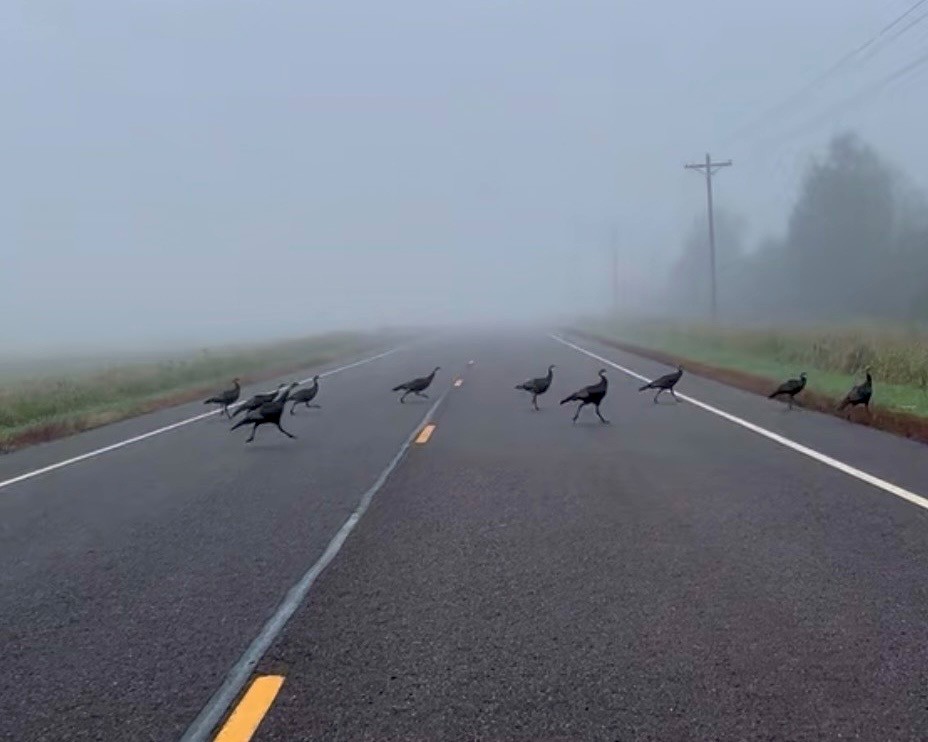
It was May 5, cold and windy, and I was wrapped up in a blanket with a winter hat, shivering as I watched one of my son’s first baseball games of the season. After a quick drop-off at the end of the game, I jumped in the car and hurried to Lake Elmo for an evening event. Halfway down Oakgreen Ave., a giant brown bird suddenly raced out into the road directly in front of my car.
Screeeeeeeeech!!! I slammed on the breaks desperately hoping to avoid a crash.
Gobble gobble gobble gobble!! At the final second, the turkey launched itself into the air and cleared the hood of my car before racing around an oncoming pickup truck and gobbling off into the woods. Thanksgiving lives to see another day.
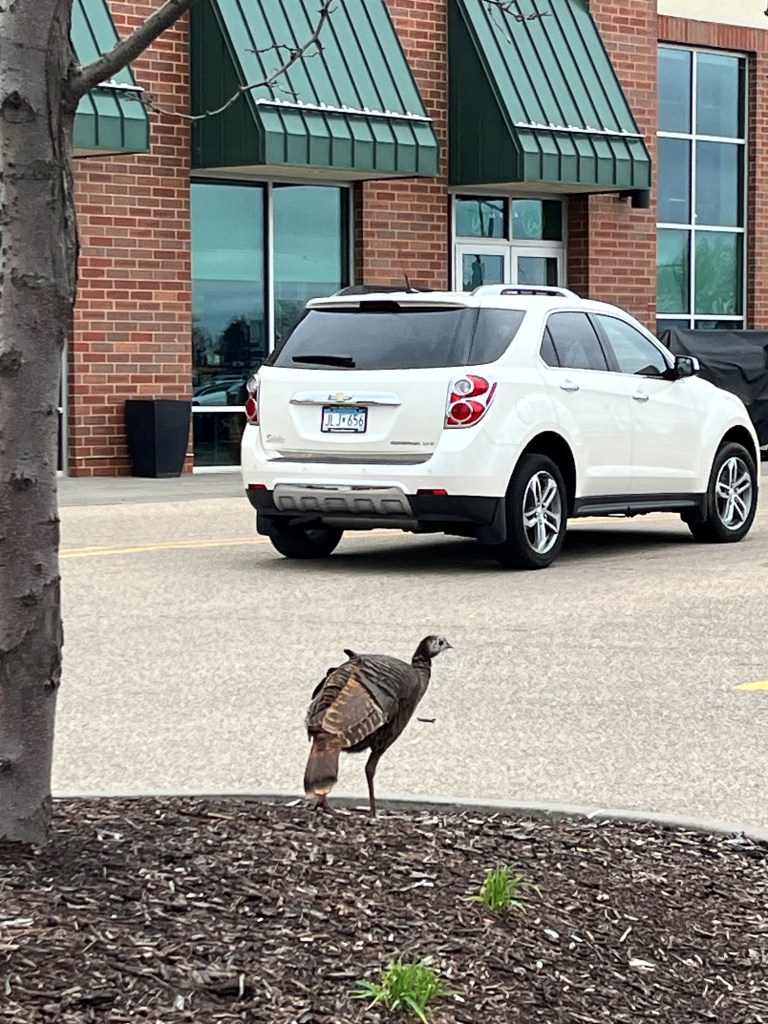
Insurance companies in Minnesota estimate that there are 35,000-40,000 deer-vehicle collisions every year, which in total cause $250 million in damages. Less well documented are the turtles, turkeys, raccoons and other small wildlife that are killed by cars on roads around the state. This month, Environment Minnesota hopes to enlist the public’s help to gather additional data that road authorities and local communities can use to design safer roads and wildlife crossings. The week of action will take place from May 22 to May 29.
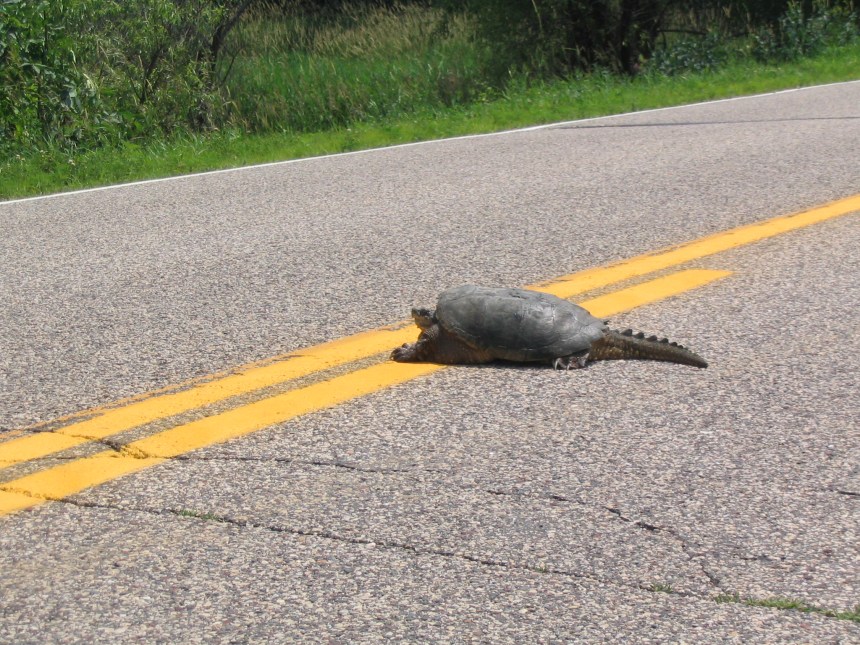
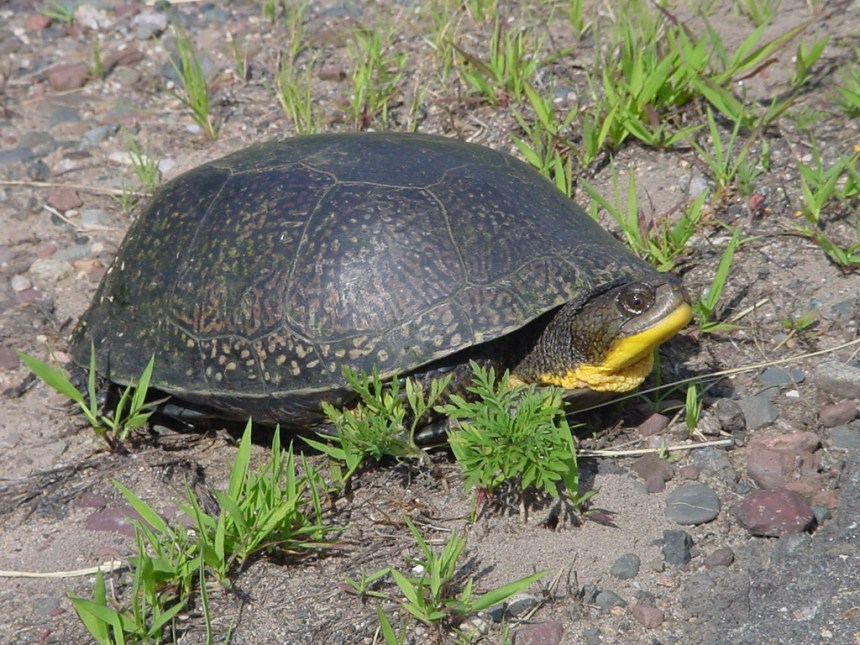
Slow moving turtles are especially likely to be hit by cars during the early summer when females are coming onto land to build nests and lay eggs. Some species, such as the state-listed threatened Blanding’s turtle, will travel as far as a mile from the water to reach their annual nesting sites. When the babies hatch, they make this same journey in reverse, making both the mothers and the babies vulnerable to harm along the way.
In 2014, Washington County worked with the Washington Conservation District, Carnelian Marine St. Croix Watershed District, Minnesota Department of Natural Resources, and Minnesota Herpetological Society to construct a turtle tunnel under the road along Hwy 4 near Big Marine Regional Park. Over the next ten years, Conservation District staff recorded hundreds of animals using the tunnel to safely cross the road – everything from frogs, snakes, and skinks, to weasels, rabbits, ducklings, and (of course) turtles.

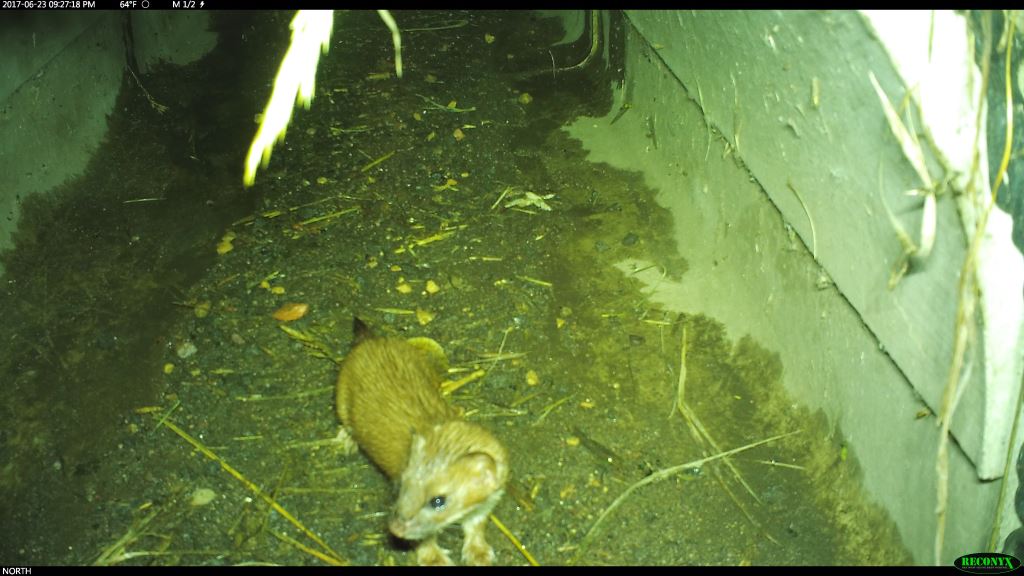
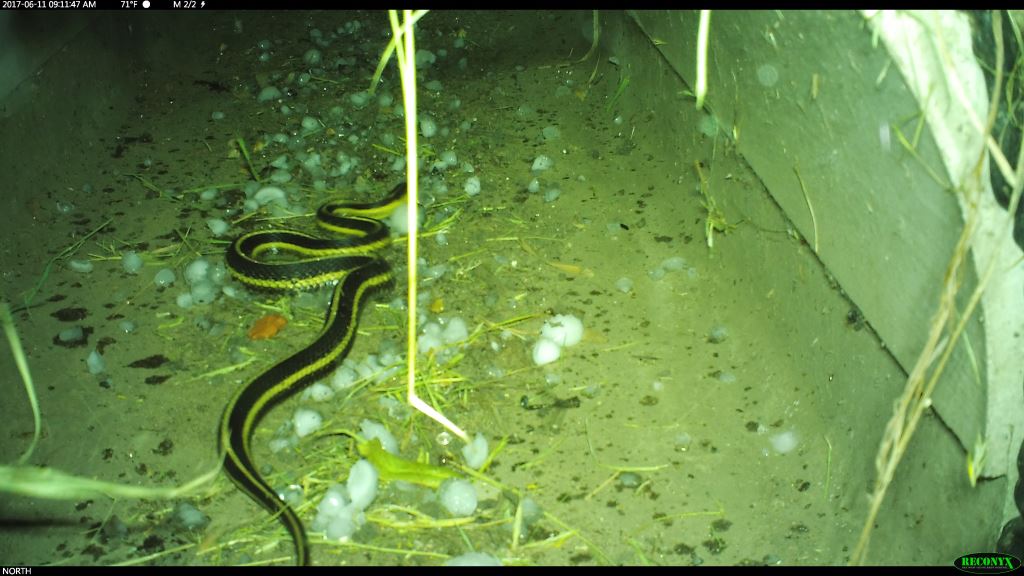
According to Environment Minnesota, there are more than 1000 similar wildlife crossings nationwide and, on average, these crossings reduce animal deaths by 90%. In Minnesota, the Department of Transportation has constructed more than 150 wildlife passage benches beneath bridges since 2005. Washington County’s turtle tunnel is small, but in other parts of the country, you can also find crossings large enough to support deer, elk, moose, bears, and coyotes. Utah built the country’s first wildlife bridge in 1975 and now manages more than 50 large wildlife crossings.
If you love animals and would like to participate in a citizen-science effort to reduce wildlife casualties in the future, there are a few options.
Head to environmentamerica.org/minnesota/center/events/wildlife-casualty-count-week to sign up for the May 22 – 29 event. After you sign-up, you’ll get an email with instructions for collecting data, including a QR code to add ROadS Observation tracking to a Survey123 app on your phone. The app makes it quick and easy to record wildlife you see while driving that have either successfully crossed the road or been hit and killed.
You can also track turtles throughout the year, using an app called TurtlTracker that debuted last summer.

If you see a turtle crossing the road, carefully help it across in the same direction it is traveling, but only if it is safe to do so. Beware that snapping turtles can reach their heads two-thirds of the way back their bodies; use gloves if you have them, hold onto their shells as far back as possible, and never grab them by the tails.


